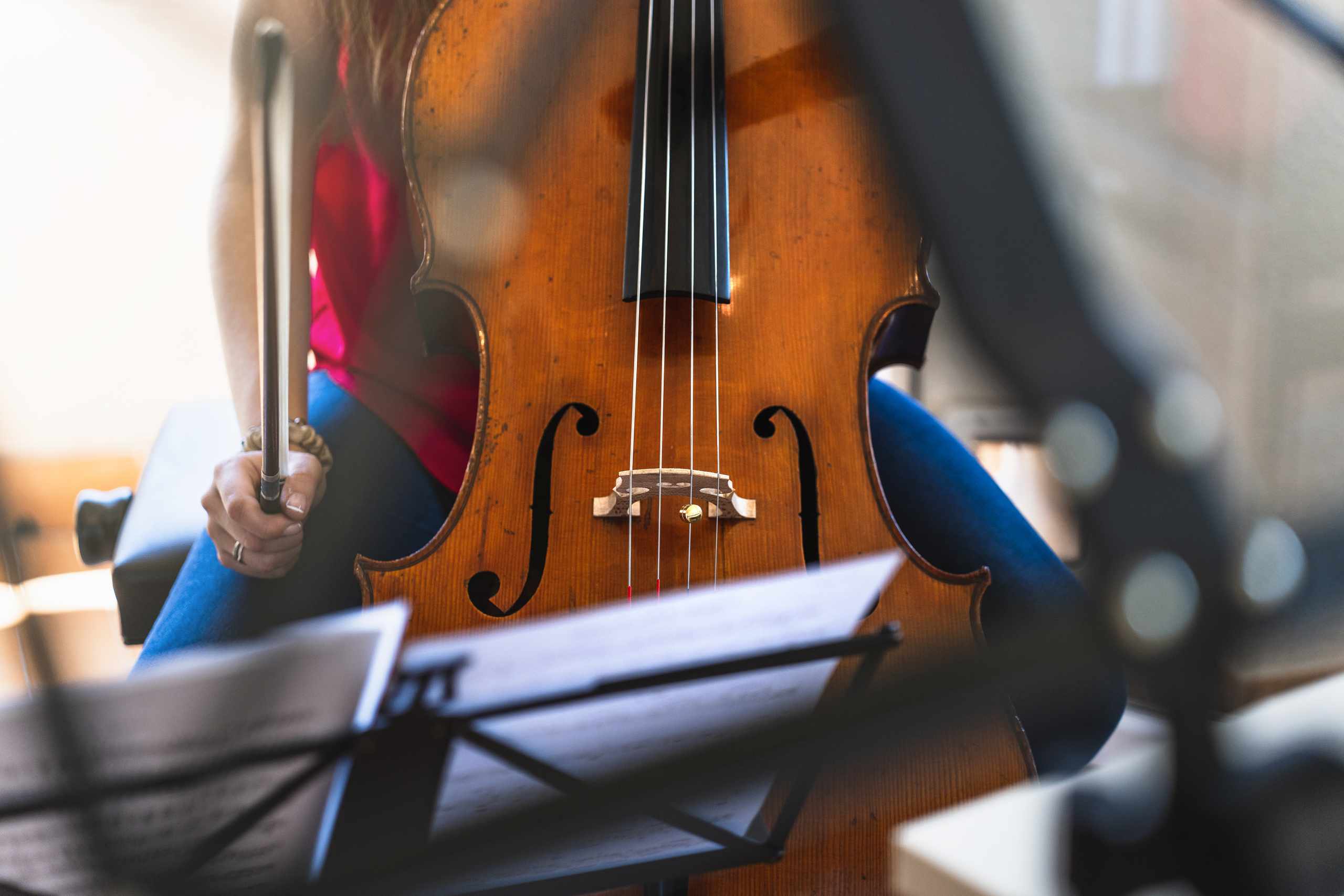
You could be in a good bow hold for a couple of seconds and then the moment you start to draw the bow across the strings your fingers will curl, your thumb will stiffen, or your pinky will get stuck. This makes changes of direction awkward and causes the bow to jump, slide, or bounce against the string. So what is a good bow hold for beginners? It doesn’t need to be a picture-perfect bow hold; it just needs to allow the bow to be supported while giving the fingers and wrist room to move.
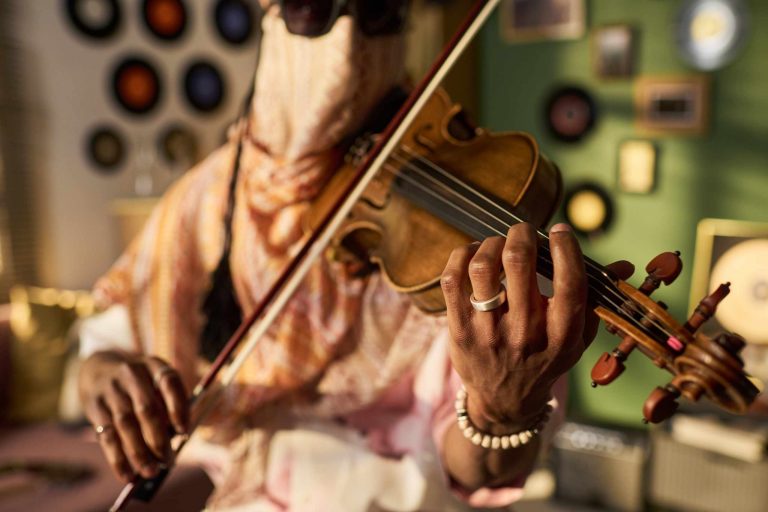
Let’s start with the thumb. In most beginner bow holds, the thumb is slightly bent and provides some support near the frog. If it is completely stiff, that tension will quickly spread throughout the hand. The index finger adds some weight to the bow. The middle and ring fingers add contact and stability. The pinky finger usually rests on the top of the bow to help balance it when less of the bow is supported by the string. All these fingers do a bit of all of these things, and none should feel like they are holding the bow all on their own.
Instead of focusing on the shape of the hand, it’s more helpful to notice how it works during a bow stroke. Hold the bow away from the violin and gently move the bow up and down a few centimeters. Do the fingers stay curved or do they quickly straighten and squeeze together? Next, place the bow over an open D string and let the string take some of the weight. Are you still holding the bow just as tightly as before? A lot of beginners continue to hold the bow just as tightly even though the string is now taking on some of the work of supporting the bow.
It’s often easiest to work on the bow hold with several very short strokes in the middle of the bow. Make the sound very quiet and don’t use the whole bow. After a few strokes, pause and don’t change the way you’re holding the bow. How does the thumb feel? What about the index finger? The pinky? If any of these fingers feels tight, reset the hand before continuing. Short strokes make it much easier to focus on the bow hold, since you’re not also trying to manage long strokes or awkward changes at the frog or tip.
If you try to correct a scratchy sound by squeezing harder, it usually just leads to a second problem instead of fixing the first one. Scratchiness can also be caused by the bow speed, the contact point, or a wobbly bow path. If the sound gets rough, check first whether the bow is going in a straight line between the fingerboard and the bridge. Then see if the hand has tightened. Removing excess grip allows you to more easily adjust the bow pressure, instead of just trying to push the bow down even harder.
Another way to check your bow hold is to play a slow down-bow and then follow it with an up-bow on one open string. Your hand shouldn’t feel stuck or frozen when you change the direction of the bow. Small adjustments in the fingers and wrist allow the bow to turn smoothly. If there’s a noticeable jerk at every change of direction, try reducing the length of your strokes and using less of the bow. Once the change of direction becomes easier, you can slowly increase the length again.
After several minutes of playing the bow, set the violin down and think about how your hand feels. You shouldn’t feel like your fingers have been clamped onto the bow the entire time. Some tension is expected since you’re learning a new motor skill, but you should still be able to relax the grip if you need to. The key isn’t to worry about whether your bow hold is “perfect.” Instead, ask yourself whether you’re able to move the bow, change direction, and adjust the sound without your fingers becoming stiff and immobile.